#adReader-supported: we may earn a commission if you buy through our links, at no extra cost to you. It never decides a ranking. How we pick · Disclosure
The decision, in one paragraph
Portable hoops are sold as outdoor products and specified for it: Lifetime's boards use UV-protected inks and all-weather nets, Escalade's weight bag is rated for rain, snow and intense sun, and every maker on this site publishes an outdoor warranty. Nothing about the pole, the board or the rim needs a garage.
The exception is a water-filled base in a freezing climate. That is the one component winter reliably ruins, and it ruins it in a way no warranty covers. So the whole question comes down to what is in the tank.
Why a water base splits, and where
Water expands by roughly nine per cent when it freezes. A sealed plastic tank filled to its published capacity has nowhere to put that expansion, so the pressure goes into the walls. Bases do not usually burst spectacularly; they develop a split along a moulding seam or around the fill boss, and then they quietly empty in the spring thaw.
That is the failure mode to watch for: a hoop that was stable in October and tips in April has almost always lost its ballast through a freeze crack. And a cracked base cannot be repaired properly — plastic welds on a load-bearing tank do not hold up.
The three options
1. Drain the water and leave the hoop standing
Unscrew the fill cap and tip the base toward it, or siphon with a hose. The risk is the obvious one: an empty base is a light base, and winter is the windy season. Lay the hoop down flat against a wall or fence for the winter, or strap it to something, rather than leaving a 54-inch board standing on an empty tank in a gale. Wind and tipping covers what a board in a gust actually does.
2. Swap the water for sand
The best answer if you can face the work. Sand does not freeze, weighs more than the same volume of water, and cannot leak away through a crack. It also means never making this decision again. The catch is that filling a base with sand through a small cap takes an afternoon, and emptying it later takes longer — how to fill a portable base has the method and the weights.
3. Leave the water in and accept the risk
Defensible in a climate where the ground freezes for a few nights rather than a few months, and defensible if the base is only partly full — there is headroom for the ice to expand into. Not defensible where the tank freezes solid for weeks. If you take this route, leave the cap slightly loose so the expansion has somewhere to vent, and check the base in spring.
Four jobs worth doing before the first freeze
- Move the hoop off the snow route. Decide now where the shovel or the plough goes, and put the hoop somewhere else. A base clipped by a plough blade is a dead base, and a hoop parked in the drift line spends the winter in salt.
- Go round the hardware with a wrench. Board bolts, bracket bolts, pole splices. Thermal cycling through a winter loosens everything, and the check is easier now than in March. How to stop a hoop from shaking has the order.
- Take the net off, or accept losing it. A nylon net that spends a winter frozen, thawed and UV-bleached is a net you will be replacing anyway. Keeping a spare in the garage is a $5 to $15 item.
- Keep road salt off the pole. This is the real corrosion risk for a portable — not rain, but salt splash and salted slush sitting against powder-coated steel at the base. Rust prevention covers what to do about it and what not to bother with.
Our picks for this
What winter actually costs you
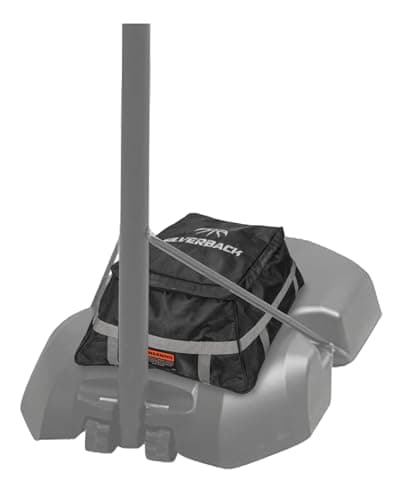
Sand ballast instead of water is the one upgrade that ends the problem. A spare net is the consumable winter takes.
Best portable hoop ballast
Silverback Portable Basketball Hoop Weight Bag
Warranty: not published8.3/10Up to 100 lb of sand on top of the base: weight that does not freeze, rated by Escalade for rain, snow and sun.
$49.95Amazon#ad · Price as of November 3, 2026 · Disclosure for the link to Silverback Portable Basketball Hoop Weight Bag
Best replacement net
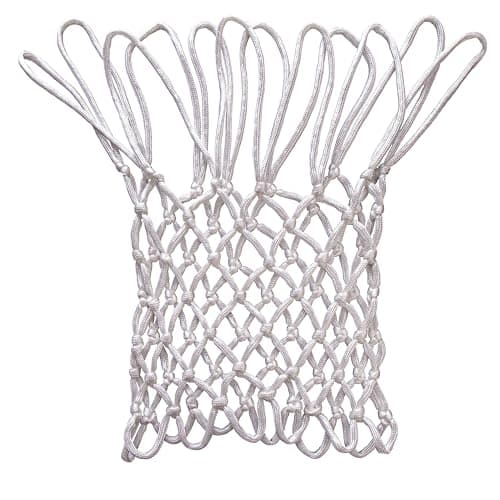
Goalrilla All-Weather Nylon Basketball Net
Warranty: not published8.6/10UV-resistant woven nylon with reinforced loops, for Goalrilla, Silverback and Goaliath rims. Buy two.
$14.95Amazon#ad · Price as of November 3, 2026 · Disclosure for the link to Goalrilla All-Weather Nylon Basketball Net
Best cheap outdoor net
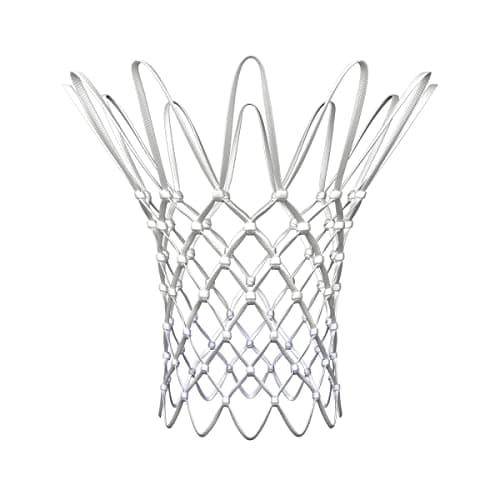
Spalding All-Weather Basketball Net
1-yr warranty7.6/10The five-dollar standard-rim net. The cheapest way to start each spring with a net that is not grey.
$3.19Amazon#ad · Price as of November 3, 2026 · Disclosure for the link to Spalding All-Weather Basketball Net
If you do store it inside
Some people have the garage space and would rather use it. Two notes. First, you still have to drain a water base — rolling 290 lb of water into a garage is both unnecessary and awkward. Second, lay the hoop down rather than standing it: a tall hoop in a garage is a thing that gets reversed into.
Getting it in there is the usual tilt-and-wheel job, with the rim lowered first: how to move a portable hoop has the method, including what not to grip.
What to check in spring
- Base ballast level. Refill a water base to capacity; it will be down from evaporation even without a crack.
- Seams and the fill boss. A dark damp line on the plastic is a split.
- Every bolt. Again, with a wrench.
- Rim level and net. A rim that sits low has usually been hung on, not frozen.
- The pole at the ground line. This is where corrosion starts on any hoop, portable or in-ground. How long a hoop lasts covers the pattern.
Do that in an hour on the first warm Saturday and the hoop plays like it did in October. Skip it for three years and you will be shopping again: best portable hoops is where that ends up.
How we picked
What earns a pick on this page
Every pick here is built from figures you can check for yourself: the maker's published backboard, pole, overhang and adjustment specs; the hole size, bag count and cure time printed in its install manual; the warranty term in the maker's own wording, exclusions included, with the date we read it; and the failure patterns owners report (base cracking, backboard fogging, two-piece pole lean), which shape the “skip this if” line. Every figure links to where it came from.
Those figures go through one fixed rubric, so an 8.1 here means the same thing as an 8.1 anywhere else on the site and the top pick is the one that earns it for the driveway it is named for. Commissions never set a score or decide a pick. The rubrics and their weights are published.
Questions
Frequently asked
Do I need to store my portable basketball hoop for the winter?
The hoop itself, no — portables are specified for outdoor use, with UV-protected graphics and all-weather nets. The one part that needs attention is a water-filled base in a freezing climate, because water expands as it freezes and splits the tank. Drain it, swap it for sand, or at minimum leave the cap loose so the ice has somewhere to go.
Will a portable basketball hoop base crack if the water freezes?
It can, and it is the most common cold-weather failure on a portable. Water expands by about nine per cent when it freezes, and a sealed tank filled to capacity has nowhere to put it. The split usually appears along a moulding seam or around the fill boss, and it empties the base during the spring thaw rather than dramatically. Sand-filled bases are immune.
Should I drain a portable basketball hoop for winter?
Yes, if it holds water and your winter goes properly below freezing. But then lay the hoop down or strap it, because an empty base is a light base and winter is the windy season. If you would rather not have to decide every year, refill with sand instead — it does not freeze and it weighs more.
Can you leave a basketball hoop out in the snow?
Yes. Snow is not what damages a hoop — frozen water inside the base is, and road salt against the pole is. Keep the hoop out of the plough route and off the slush line, brush snow off the board rather than letting it sit, and go round the hardware with a wrench in spring.
Does winter void a basketball hoop warranty?
Not by itself — these are outdoor products. What is not covered is damage you caused: a base split by freezing water is the owner's problem, as is a bent rim from hanging. Lifetime publishes 5 years on most basketball systems in its FAQ; Spalding publishes one year for defects in materials and workmanship. Neither covers a frozen base.
Keep reading
Related on Rim & Rebound
Receipts
Sources
- Silverback — Portable Basketball Hoop Weight Bag (B8477W) product page (read 2026-09-21)
- Goalrilla — All-Weather Nylon Basketball Net (B2602W) product page (read 2026-09-21)
- Spalding — All-Weather Basketball Net product page (read 2026-09-21)
- Lifetime — 90040 44-Inch Impact portable hoop product page (read 2026-09-21)
- Lifetime — 71566 50-Inch Polycarbonate Action Grip portable hoop product page (read 2026-09-21)
- Lifetime — FAQ: "What is the warranty period on a Lifetime basketball system?" (read 2026-09-21)
- Spalding — Warranty Information (basketball systems: 1-year limited; read 2026-09-21)
- Silverback — NXT 54 Portable product page (read 2026-09-21)
Every figure above is a published one you can click and check. Specs come from the maker's own product pages (linked on every product), install figures from the maker's manual or installation page with the date we read it, and warranty terms from the maker's warranty page or manual. Buy buttons go straight to the current Amazon listing, so the price you see is today's. Where a maker leaves a figure off the page, the card says “not published” rather than guessing. Read how we pick.