#adReader-supported: we may earn a commission if you buy through our links, at no extra cost to you. It never decides a ranking. How we pick · Disclosure
Quick picks
The rankings at a glance
| # | Product | Best for | Score | Price |
|---|---|---|---|---|
| 1 | 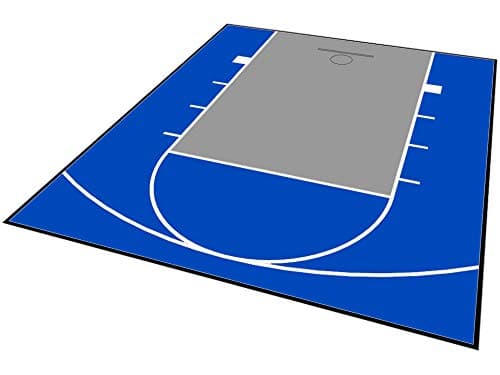 ModuTile Outdoor Basketball Half Court Kit, 20 x 24 ft About 500 sq ft of one-square-foot perforated tile with high-school lines and edge ramps included, made in the USA, rated by its maker to 40,000 lb. | Best complete court kitWarranty: not published | 8.0 /10 | $2,395.00Amazon |
| 2 | 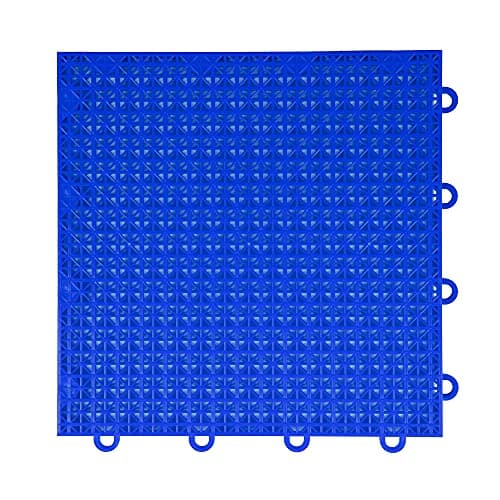 IncStores ProGame Outdoor Court Tiles, 52-Tile Pack Fifty-two vented 5/8-inch tiles: roughly the area under the hoop and inside the arc, in a color range that lets you lay lines in tile. | Best pack to start withWarranty: not published | 8.3 /10 | $149.99Amazon |
| 3 | 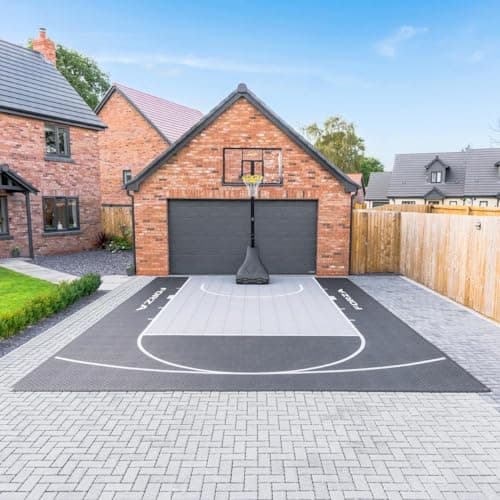 FORZA Basketball Court Floor Tiles, 21.4 x 26.4 ft Mini Court Pre-painted lines and tiles pre-connected in blocks of four, rated to a car's weight. The priciest route by a distance. | Best for the fastest installWarranty: not published | 7.5 /10 | $3,001.99Amazon |
| 4 | 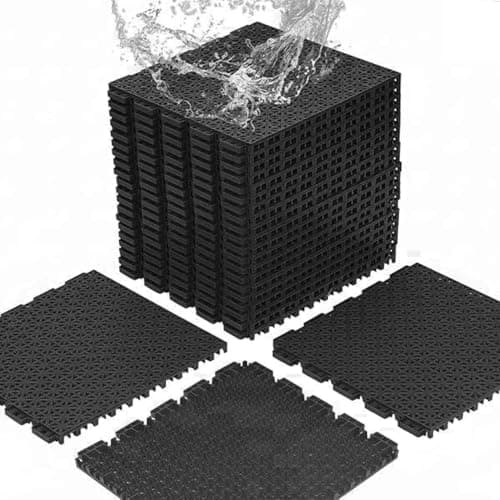 jxgzyy Interlocking Basketball Court Tiles, 24-Pack Twenty-four 5/8-inch tiles with a published 4,409 lb load figure, and a listing honest enough to say concrete only. | Best small test patchWarranty: not published | 6.8 /10 | $97.69Amazon |
| 5 | 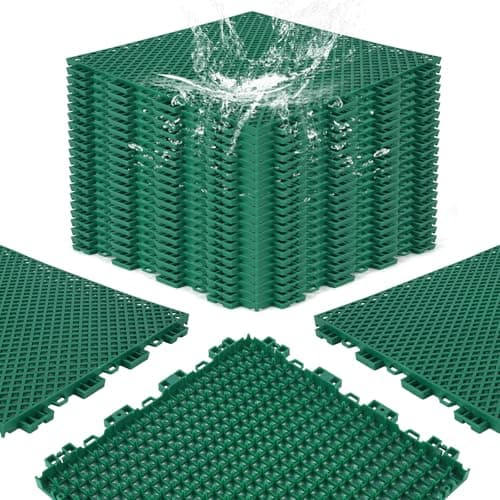 Selacca Basketball Court Tiles, 24-Pack The only budget pack that publishes both tile size and thickness: 12 x 12 inches at 0.55 in. Thinner than the rest, and it shows. | Cheapest tile packWarranty: not published | 7.0 /10 | $89.99Amazon |
#ad · Prices come live from Amazon, last checked November 3, 2026. Scores are ours, built from published specs, the install manuals and quoted warranty terms. Photos are illustrative stock. Tap a row for the full write-up.
What a court tile actually changes, and what it does not
A modular court tile is a one-square-foot grid of polypropylene that sits on top of your concrete and locks to its neighbors. Nothing is glued and nothing is drilled. The tile deck stands a little over half an inch above the slab on short support columns, so the whole surface is a floating floor with an air gap and perforations under it.
That gap is the entire point. It does three things a bare driveway cannot. Water leaves faster, because rain drains through the mesh instead of pooling on a slab that was poured dead flat. The surface gives very slightly under a landing, because each tile flexes on its columns — every maker here describes that as cushioning for knees and ankles, and the physical structure behind the claim is visible on the underside of the tile. And the ball comes off a uniform plastic deck instead of broom-finished concrete, so the bounce stops changing depending on where you stand.
What tile does not do is make a bad slab good. It will not stop a crack from moving, it does not level a slope, and it does not give you more room than the concrete already has. If the driveway drops away from the garage, a tiled court drops with it. Hoops on a sloped driveway is the page for that problem, and tile is not the fix.
How these were ranked
This site does not own a tiled court and has not installed one, so nothing here is a hands-on test. These five are ranked on what their makers publish, in this order of weight.
Thickness, first. Tile thickness decides how the ball behaves and how much the deck flexes. Four of these five are 5/8 of an inch; the Selacca pack publishes 0.55 of an inch, which is thinner than it sounds when the difference is a tenth of the total. Anything materially thinner than half an inch is a patio mat being sold as a sport surface.
A published load rating, second. A driveway is a parking space that occasionally becomes a court. If you will ever roll a car over the tiles, the only safe answer is a maker that publishes a number: ModuTile says its tiles support vehicles up to 40,000 lb, FORZA says up to 1.65 ton, and the jxgzyy listing states 4,409 lb. The other listings say nothing, and a silent listing is a no.
Drainage, third. Every tile here is perforated, but the wording differs: ModuTile describes water draining through the mesh design, the IncStores tiles are described as dissipating puddles, and the Selacca tiles add curved drainage grooves on the underside. A perforated deck over a sloped slab is the combination that stays dry; a perforated deck over a dead-flat slab with a low corner still has a low corner.
What is in the box, fourth. Two of these five arrive with the lines already on the tiles and the beveled edge ramps included. Three are bare tile. That difference is worth more than it looks: painted line tiles are the expensive part of a kit, and a raw tile edge at the perimeter is a genuine trip hazard until the ramps go on.
Cost per square foot, last. Not headline price — cost per square foot, which is the only honest way to compare a 24-tile pack with a 500-square-foot kit. The 52-tile pack is the cheapest surface per foot of anything live here; the two 24-tile packs cost more per foot than it does; the finished kits cost several times either, and you are buying lines, edges and a single delivery with that money.
We do not print Amazon prices in the text, because they move. The buttons on each card show today's, and the maker's own list prices are quoted with the date they were read.
The published numbers
The coverage math, which is where most of the money gets wasted
One tile is one square foot, which makes this easy if you measure before you order. A regulation high-school half court is 50 feet wide by 42 feet deep — 2,100 square feet, roughly four times the biggest kit here and about ten times what a normal driveway can spare. Nobody is tiling a regulation half court on a driveway.
The useful numbers are the ones inside it. A high-school key is 12 feet wide and 19 feet from the baseline to the free-throw line, and the high-school three-point line sits 19 feet 9 inches from the center of the rim. Tile the key alone and you need about 230 square feet. Tile a square 20 by 20 feet under the hoop — which is the honest footprint of most two-car driveways — and you need 400.
Against those numbers: a 24-tile pack is 24 square feet, roughly the apron directly under the rim. A 52-tile pack is 52 square feet, enough for the shooting area in front of the backboard. The ModuTile kit is listed at 20 feet 6 inches by 24 feet 6 inches, so about 500 square feet, and the FORZA mini court at 21.4 by 26.4 feet is a little larger again.
The practical sequence is: tile the shooting area first with one pack, live with it for a season, and extend it if the family actually plays on it. Every system here interlocks with more of itself, so a pack is a down payment rather than a dead end — and if the answer is “we use the top of the driveway and nothing else”, you saved yourself four hundred square feet of plastic.
What tile will not fix
A slab that is too thin or already cracked. Concrete Network publishes four inches as the minimum for a residential driveway carrying a passenger vehicle, and five to six for heavier ones. Tile adds no structure at all; it spreads load slightly and hides the crack from view while it keeps moving underneath.
An unpaved surface. The jxgzyy listing is blunt about it in capital letters: not suitable for grassland. Laid on dirt or lawn, interlocking tiles move, dish and separate. ModuTile sells a gravel-paver court base for exactly this reason, and that is a different and much larger project.
Anchoring. Tile is a floating floor. It is laid around the pole of an existing hoop, not under its footing, and it is not a substitute for a footing or an anchor plate for a new one. Installing a basketball hoop on existing concrete covers that problem honestly, including the fact that no maker publishes a method for anchoring a full-size pole to a slab that is already there.
Winter. Nobody in this category publishes a freeze-thaw cycle count. The tiles are described as UV- and temperature-treated and the perforations mean meltwater leaves, but a plastic deck under snow is a plastic deck you will be shoveling carefully, with a plastic blade rather than a steel one.
The verdict
In detail
The picks, in full
Rank 1
Best complete court kit
ModuTile Outdoor Basketball Half Court Kit, 20 x 24 ft
About 500 sq ft of one-square-foot perforated tile with high-school lines and edge ramps included, made in the USA, rated by its maker to 40,000 lb.
Spec sheetResearched · maker-published
| Category | Court tile |
|---|---|
| Warranty (quoted) | No warranty term published on the maker's backyard-court page or on the Amazon listing |
| Replacement parts | ModuTile sells individual replacement tiles, edge and corner ramps and painted line tiles in the same colors, plus a gravel-paver court base for unpaved ground. |
| Coverage | About 500 sq ft of tile at the listed 20 ft 6 in x 24 ft 6 in court size |
| Cover | UV protection for direct sun exposure; water drains through the mesh design |
| Material | High-impact polypropylene perforated interlocking tiles, one square foot each, manufactured in the USA |
| Dimensions | Court size 20 ft 6 in x 24 ft 6 in as listed; overhang allowance 2 ft 3 in |
| Weight | Tiles described as strong enough to support vehicles weighing up to 40,000 pounds |
| Includes | High school basketball painted lines and edges included |
| List price (maker) | $1,843.00 sale / $2,260.00 list for the 20 x 24 ft kit (modutile.com, read 2026-11-02) |
How the 8.0 score breaks down
- Outdoor performance (30%)
- 9
- Durability (25%)
- 9
- Fit / compatibility (15%)
- 7
- Ease of use / install (10%)
- 8
- Value at list price (20%)
- 6
What the spec sheet supports
- Lines, edge ramps and the right tile count arrive together, so there is no second order and no paint day
- The maker publishes a 40,000-lb vehicle load figure, which is the spec that matters if you still park on the slab
- One-square-foot tiles make the coverage math trivial and replacements cheap
Where it falls short
- It is a 500-square-foot commitment: most two-car driveways do not have that much clear concrete
- No warranty term is published on the maker's page or the listing
- The maker's own direct price for this kit was lower than the Amazon price when we checked, so compare both
Skip this if…
…you only want to tile the key and the free-throw area; a 24- to 52-tile pack costs a tenth as much and you can grow it.
#ad · Price as of November 3, 2026 · Disclosure for the link to ModuTile Outdoor Basketball Half Court Kit, 20 x 24 ft
Rank 2
Best pack to start with
IncStores ProGame Outdoor Court Tiles, 52-Tile Pack
Fifty-two vented 5/8-inch tiles: roughly the area under the hoop and inside the arc, in a color range that lets you lay lines in tile.
Spec sheetResearched · maker-published
| Category | Court tile |
|---|---|
| Warranty (quoted) | No warranty term published on the Amazon listing |
| Replacement parts | Sold in single-color packs and in other pack sizes, so a court can be extended, or one cracked tile replaced, a color at a time. |
| Anchor / install | Snap-together interlocking tiles: no tools, no adhesive, no fasteners |
| Coverage | 52 tiles per pack; the same tile is sold through home-improvement retailers as 12 x 12 in, 40 tiles to 40 sq ft, i.e. one square foot each |
| Cover | Finely vented surface listed as dissipating puddles and as not fading from UV rays |
| Material | High-strength polypropylene, listed as moisture-resistant hard plastic for outdoor use |
| Dimensions | 5/8 in thick interlocking tiles; 52 tiles per pack (Shelby Blue as listed) |
How the 8.3 score breaks down
- Outdoor performance (30%)
- 8
- Durability (25%)
- 8
- Fit / compatibility (15%)
- 8
- Ease of use / install (10%)
- 9
- Value at list price (20%)
- 9
What the spec sheet supports
- One pack covers roughly the area under the hoop and inside the arc, which is where a driveway court actually gets used
- Several colors in the same tile, so lines can be laid in tile rather than painted
- The cheapest real sport surface per square foot of the five here
Where it falls short
- No lines and no edge ramps in the pack: a raw tile edge is a trip hazard until you buy them
- No published warranty term and no published load rating
- Colors are sold per pack, so a two-tone court means two or more orders
Skip this if…
…you want the court finished in one weekend with the lines already on it; the ModuTile kit ships that way.
#ad · Price as of November 3, 2026 · Disclosure for the link to IncStores ProGame Outdoor Court Tiles, 52-Tile Pack
Rank 3
Best for the fastest install
FORZA Basketball Court Floor Tiles, 21.4 x 26.4 ft Mini Court
Pre-painted lines and tiles pre-connected in blocks of four, rated to a car's weight. The priciest route by a distance.
Spec sheetResearched · maker-published
| Category | Court tile |
|---|---|
| Warranty (quoted) | No warranty term published on the Amazon listing |
| Replacement parts | FORZA lists replacement gray and black tiles for the same system. |
| Anchor / install | Tiles pre-connected as sets of four and snapped together; the listing claims 75% less preparation time |
| Material | Polypropylene tiles with a water-filtered (perforated) surface, listed as withstanding extreme temperatures without cracking |
| Dimensions | 21.4 ft x 26.4 ft mini court as listed; mini, half and full court sizes offered |
| Weight | Listed as able to withstand the weight of a car, up to 1.65 ton |
| Includes | Pre-painted court-regulation line markings |
How the 7.5 score breaks down
- Outdoor performance (30%)
- 9
- Durability (25%)
- 8
- Fit / compatibility (15%)
- 7
- Ease of use / install (10%)
- 9
- Value at list price (20%)
- 4
What the spec sheet supports
- Pre-connected blocks of four cut the snapping work by roughly three quarters
- The lines are already on the tiles, arc included
- Published car-weight rating, so the driveway can still be a driveway
Where it falls short
- The most expensive option here by a wide margin
- No warranty term published on the listing
- A 21 x 26 ft footprint is bigger than many driveways can give up
Skip this if…
…you are tiling a 20-by-20 pad or smaller; buy tiles by the pack and lay your own lines in tile.
#ad · Price as of November 3, 2026 · Disclosure for the link to FORZA Basketball Court Floor Tiles, 21.4 x 26.4 ft Mini Court
Rank 4
Best small test patch
jxgzyy Interlocking Basketball Court Tiles, 24-Pack
Twenty-four 5/8-inch tiles with a published 4,409 lb load figure, and a listing honest enough to say concrete only.
Spec sheetResearched · maker-published
| Category | Court tile |
|---|---|
| Warranty (quoted) | No warranty term published on the Amazon listing |
| Replacement parts | Sold in 20- and 24-tile packs in several colors; another pack is the only replacement path. |
| Anchor / install | Snap-together interlock; the listing says it installs on concrete, asphalt and garage floors and is NOT suitable for grassland |
| Material | Polypropylene with drainage channels and a slip-resistant textured surface, listed as UV-protected against fade and warp |
| Dimensions | 5/8 in thick interlocking tiles, 24 per pack |
| Weight | Listing states a load-bearing capacity of 4,409 lb |
How the 6.8 score breaks down
- Outdoor performance (30%)
- 7
- Durability (25%)
- 6
- Fit / compatibility (15%)
- 7
- Ease of use / install (10%)
- 9
- Value at list price (20%)
- 6
What the spec sheet supports
- Cheap enough to buy one pack, lay it under the rim and see whether the bounce suits you
- Publishes a load figure, which most generic tile listings do not
- Says plainly what it will not do: hard surfaces only, no grass
Where it falls short
- A 24-tile pack is 24 square feet, which is a patch and not a court
- No warranty, no named manufacturer behind the brand and no edge ramps offered
- Per square foot it costs more than the 52-tile IncStores pack
Skip this if…
…you are surfacing the whole key; the 52-tile ProGame pack covers more than twice the area for less per square foot.
#ad · Price as of November 3, 2026 · Disclosure for the link to jxgzyy Interlocking Basketball Court Tiles, 24-Pack
Rank 5
Cheapest tile pack
Selacca Basketball Court Tiles, 24-Pack
The only budget pack that publishes both tile size and thickness: 12 x 12 inches at 0.55 in. Thinner than the rest, and it shows.
Spec sheetResearched · maker-published
| Category | Court tile |
|---|---|
| Warranty (quoted) | No warranty term published on the Amazon listing |
| Replacement parts | Packs of 24 only; no edge ramps or painted line tiles offered. |
| Anchor / install | Interlocking, no glue or fasteners; listed for concrete, asphalt or any stable base, and reusable after disassembly |
| Cover | UV- and high/low-temperature treated, micro-textured anti-slip surface with curved bottom drainage grooves |
| Material | Polypropylene with internal reinforcing ribs and bottom support columns; 12-inch edge locking mechanisms |
| Dimensions | 12 in x 12 in tiles, 0.55 in thick, 24 per pack |
How the 7.0 score breaks down
- Outdoor performance (30%)
- 7
- Durability (25%)
- 6
- Fit / compatibility (15%)
- 7
- Ease of use / install (10%)
- 9
- Value at list price (20%)
- 7
What the spec sheet supports
- States the tile size and the thickness, so the coverage math can be done before you order
- A multi-arch cross-section with support columns under the deck, not a flat sheet of plastic
- The cheapest way onto a tiled surface of anything live in this category
Where it falls short
- Thinner than the 5/8-inch tiles here, and thickness is the spec that decides how a ball comes off the surface
- No load rating, no warranty term and no edge ramps
- 24 tiles cover 24 square feet: about the area directly under the rim
Skip this if…
…the tiles will ever carry a car; the ModuTile and FORZA systems publish vehicle load figures and this one does not.
#ad · Price as of November 3, 2026 · Disclosure for the link to Selacca Basketball Court Tiles, 24-Pack
Buyer's guide: laying tile over a driveway
Measure, then order one pack fewer than you think
Tiles are a square foot each, so the arithmetic is the easy part. The mistake is buying for the court you imagine instead of the concrete you have. Chalk the outline of the area you are about to tile and leave it for a weekend; the family will show you where they actually play.
Sweep, then start from the hoop
Grit under a floating floor is what makes it click when you run on it. Sweep or blow the slab, then start the first row at the baseline under the backboard and work outward, so the tiles that have to line up with the rim are the ones laid first and the cut-offs land at the far edge where nobody shoots.
Buy the edge ramps with the tiles
A bare tile edge is a little over half an inch of hard plastic lip across your driveway. The kits include beveled edge pieces; the packs do not. Order them in the same delivery, especially on the side a car crosses.
Do not glue, screw or seal it
Every system here is designed to float, expand and contract. Fixing it down is how you get buckling in July. Leave the perimeter free, leave the expansion the interlocks give you, and accept that the court can be lifted and taken with you.
Leave the slope alone
A driveway slopes for drainage and a tiled court inherits that slope. On a noticeable grade the ball will return to one side of the court all afternoon, which is the real cost. Tile will not fix it and you should not shim it level — a shimmed tile deck traps the water the perforations were supposed to shed.
Think about the lines before you pick colors
The cheapest way to get an arc and a key is to buy two colors of tile and lay the lines in, which no bare-tile pack does for you by default but every one of them allows. The alternative is a stencil kit on the concrete before the tile goes down, which is a waste, or on the tile afterward, which the makers do not recommend. If you want painted lines, the stencil-kit route belongs on bare concrete.
Keep it clean the boring way
Rinse with a hose, or vacuum. The Selacca listing says exactly that and it is true of all of them: there is no sealing, no re-coating and no annual maintenance beyond getting leaves and grit off the deck before they grind into it.
Then spend the rest of the budget on the things that get used
A tiled court is a surface, not a session. The gear that changes how much the court gets played on is an outdoor ball in the right size, a net that survives the season, and a light for the hour after the clocks change: best outdoor basketballs, best replacement nets and best hoop lights. And if the slab is going to carry more than basketball, driveway pickleball and driveway games share the same tile.
How we picked
What earns a pick on this page
Every pick here is built from figures you can check for yourself: the maker's published backboard, pole, overhang and adjustment specs; the hole size, bag count and cure time printed in its install manual; the warranty term in the maker's own wording, exclusions included, with the date we read it; and the failure patterns owners report (base cracking, backboard fogging, two-piece pole lean), which shape the “skip this if” line. Every figure links to where it came from.
Those figures go through one fixed rubric, so an 8.1 here means the same thing as an 8.1 anywhere else on the site and the top pick is the one that earns it for the driveway it is named for. Commissions never set a score or decide a pick. The rubrics and their weights are published.
Questions
Frequently asked
Are basketball court tiles worth it on a driveway?
They are worth it for three specific reasons: a uniform bounce instead of broom-finished concrete, a deck that drains and dries faster than a flat slab, and a surface that flexes slightly on its support columns instead of being rigid. They are not worth it if what you actually want is lines on the court, more room, or a fix for a cracked or sloping slab — tile solves none of those. Start with one pack over the shooting area rather than a full kit.
How many court tiles do I need for a driveway court?
One tile is one square foot, so the tile count is the area in square feet. About 24 covers the apron directly under the rim, 52 covers the shooting area in front of the backboard, roughly 230 covers a high-school key (12 feet wide by 19 feet deep), and about 400 covers a 20-by-20-foot square, which is as much as most two-car driveways can spare. A regulation high-school half court is 50 by 42 feet, or 2,100 square feet, and that is not a driveway project.
Can you park a car on basketball court tiles?
Only where the maker publishes a load figure. ModuTile states that its tiles support vehicles weighing up to 40,000 pounds, FORZA states up to 1.65 ton, and the jxgzyy listing states 4,409 lb. The other listings here publish nothing about vehicle loads, and we would not drive on them on the strength of silence. Even on rated tile, turning a wheel on a floating deck scuffs it.
Do court tiles work on asphalt or grass?
Asphalt yes, grass no. The jxgzyy and Selacca listings both name concrete and asphalt as suitable bases, and the jxgzyy listing says in capital letters that it is not suitable for grassland. On soil or lawn an interlocking deck dishes, separates and traps water. ModuTile sells a separate gravel-paver court base for unpaved ground, which turns the job into a real groundworks project.
What thickness of court tile should I buy?
Five-eighths of an inch is the standard for outdoor sport tile and it is what four of the five systems here publish. The thinner 0.55-inch tile is cheaper and still interlocks and drains, but thickness is what decides how the ball comes off the deck and how much the surface gives, so treat it as the budget option rather than an equivalent one. Nothing materially under half an inch belongs under a basketball hoop.
Do court tiles come with lines, or do you paint them?
Both exist. The ModuTile kit includes painted high-school lines and the FORZA court arrives pre-painted; the three packs are bare tile, and the usual answer with bare tile is to buy a second color and lay the lines in tile rather than paint them. If you would rather paint, do it on bare concrete before any tile goes down — our guide to painting court lines has the stencil kits and the dimensions.
Can I put court tiles around an in-ground hoop pole?
Yes — tile is cut and laid around the pole and its concrete footing, which stays exactly as it is. What tile cannot do is anchor a new hoop: a floating deck is not a footing, and there is no published method for bolting a full-size pole to a slab that is already poured. See installing a hoop on existing concrete for the four routes that do work.
Keep reading
Related on Rim & Rebound
- Painting court linesThe cheaper upgrade to do first.
- Chalk games and court ideasThe washable version of a court.
- Hoops on existing concreteWhy a deck is not a footing.
- Where to put a hoopMeasure the slab before either purchase.
- Driveway pickleball setsThe other sport the tile serves.
- Best driveway gamesWhat else the surface gets used for.
- Hoops on a sloped drivewayTile inherits the slope; here is the fix.
Receipts
Sources
- ModuTile — Backyard Basketball Court Flooring: one-square-foot high-impact polypropylene perforated interlocking tiles, made in the USA, UV protection for direct sun exposure, water drains through the mesh design, tiles strong enough to support vehicles weighing up to 40,000 pounds, and half-court kits listed from $1,843.00 (20 x 24 ft) to $4,185.00 (44 x 29 ft) (read 2026-11-02)
- ModuTile — Basketball Half Court Dimensions: high school half court 50 x 42 ft, NBA and college 50 x 47 ft, high school three-point line 19 ft 9 in, key 12 ft wide and 19 ft from the baseline (read 2026-11-02)
- Amazon listing — MODUTILE Outdoor Basketball Half Court Kit 20ft x 24ft (Blue/Gray): court size 20 ft 6 in x 24 ft 6 in, overhang allowance 2 ft 3 in, high school painted lines and edges included, UV protection, made in USA, perforated tiles allow drainage with sloped concrete and airflow (live Amazon listing, read 2026-11-02)
- Amazon listing — IncStores 5/8 Inch Thick ProGame Outdoor Basketball Court Flooring, 52 tiles, Shelby Blue (ProGameBlu52): 5/8 in thick vented interlocking high-strength polypropylene tiles, weatherproof surface listed as never fading from UV rays, drains puddles (live Amazon listing, read 2026-11-02)
- Amazon listing — FORZA Basketball Court Floor Tiles, 21.4 ft x 26.4 ft mini court: polypropylene tiles pre-connected in sets of four, pre-painted court lines, rated to withstand the weight of a car or up to 1.65 ton, replacement grey and black tiles available (live Amazon listing, read 2026-11-02)
- Amazon listing — jxgzyy 24 PCS Interlocking Basketball Court Tiles, Black: 5/8 in thick polypropylene tiles with drainage channels, stated load-bearing capacity of 4,409 lb, for concrete, asphalt and hard surfaces, explicitly not suitable for grassland (live Amazon listing, read 2026-11-02)
- Amazon listing — Selacca 24 Pcs 12 x 12 in Basketball Court Tiles: 0.55 in thick polypropylene with internal reinforcing ribs and bottom support columns, 12 in edge locking mechanisms, UV and high/low temperature treatment, curved bottom drainage grooves (live Amazon listing, read 2026-11-02)
- Concrete Network — "How Thick Should a Concrete Driveway Be?": a minimum thickness of 4 inches is sufficient for a residential driveway carrying a passenger vehicle or SUV, 5 to 6 inches for heavier vehicles, over a well-graded compacted gravel subbase (read 2026-10-26)
Every figure above is a published one you can click and check. Specs come from the maker's own product pages (linked on every product), install figures from the maker's manual or installation page with the date we read it, and warranty terms from the maker's warranty page or manual. Buy buttons go straight to the current Amazon listing, so the price you see is today's. Where a maker leaves a figure off the page, the card says “not published” rather than guessing. Read how we pick.