#adReader-supported: we may earn a commission if you buy through our links, at no extra cost to you. It never decides a ranking. How we pick · Disclosure
Manual figures as of Sep 21, 2026. Every hole size, bag count and cure time on this page was read from the manufacturer's own install manual or installation page on that date, and each is linked. Makers revise manuals without notice: confirm on the linked page (and the paper manual in your box) before you dig, and tell us if a figure has changed.
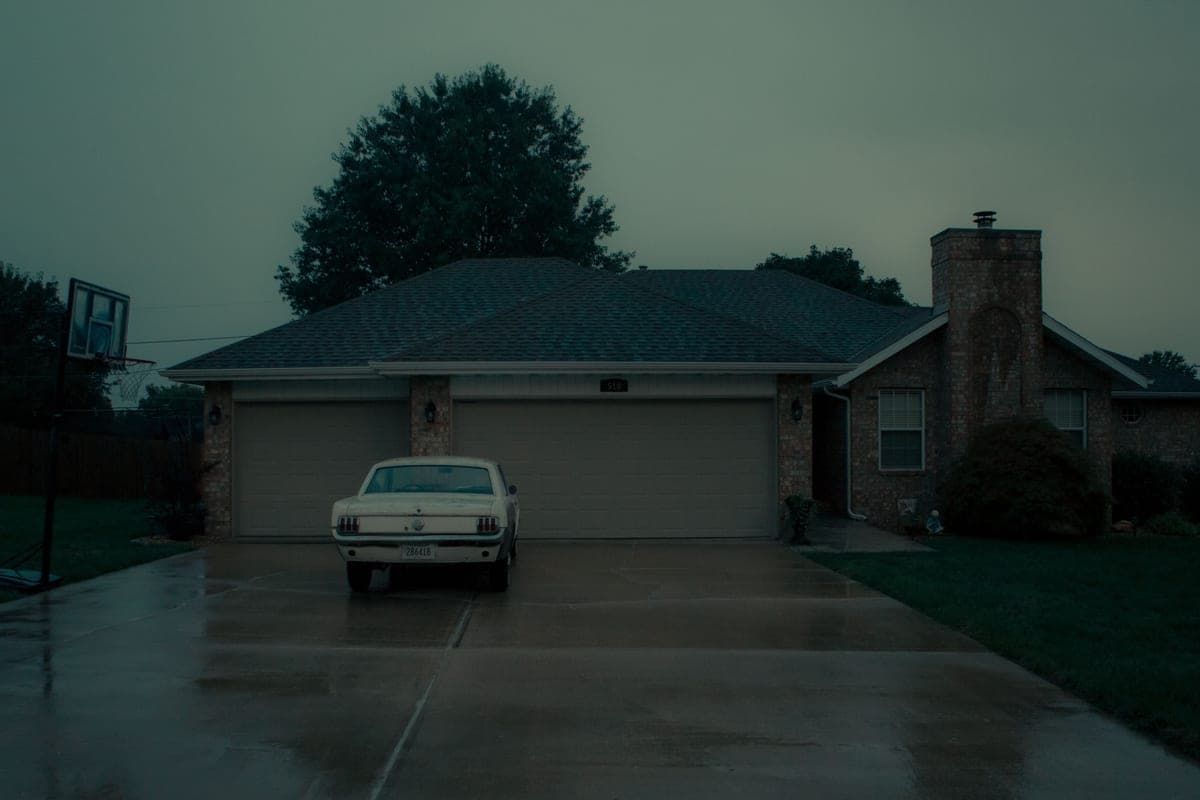
What slope does to a hoop
A driveway that drops 3 inches over the 4-foot depth of a portable base tilts that base about 3.5 degrees, which puts the rim a few inches out of level side to side or front to back and leans a 10-foot pole so that every gust and every rebound pushes it downhill. On an in-ground, a pole set to follow the slab would do the same, which is why no manual sets the pole to the slab: the Silverback manual has you level and square the anchor plate in the wet concrete with a level, and then plumb the pole on day 5 with the leveling nuts. The slope becomes the driveway's problem, not the hoop's.
In-ground on a slope: the anchor does the work
- Set the concrete form so the top of the footing is level and at the court's surface at that spot; on a slope one edge of the form will stand proud of the slab and the other flush. Goalrilla's guide and the Silverback manual both call for a form on the top 4 inches.
- Push the anchor into the wet concrete and level the plate with a torpedo level on two axes; square it to the court, not to the slope line.
- On day 5, stand the pole on the bolts with the bottom leveling nuts backed up evenly, strap a post level to two faces, and turn the nuts until both vials read plumb. The Silverback manual's step 14 covers the nuts; this is what they are for.
- Grout or mortar under the base plate if the manual calls for it, and slope the finished concrete away from the pole so water does not sit at the ground line.
Portable on a slope: shim, ballast, anchor
No maker we read publishes a slope rating for its portables, so what follows is the practical order of fixes, cheapest first. Shim the low side. Pressure-treated lumber or composite shims under the downhill edge of the base until a level on the base reads flat; cut them to the base's full width so the plastic is supported, not point-loaded. Fill with sand. Heavier than water and it does not slosh downhill. Add a weight bag. Silverback's holds 100 lb of sand on top of most bases. Point it uphill. A hoop facing up the slope sends misses back toward the house and puts the base's wheels on the low side, which is the stable orientation. Anchor it. A semi-portable that ships with cement anchors (Lifetime's 90734 Mammoth) can be bolted to the slab on its shims and stops being a portable at all. Wind and tipping has the ballast numbers.
Where 10 feet is measured on a slope
From the playing surface directly under the rim. On a sloped driveway the rim is 10 feet above the slab at the basket and a few inches more or less at the free-throw line, which is how every sloped driveway court works and not worth fighting. Set the height at the rim, check it with a tape from the front of the rim to the pavement below it, and shoot.
When to change the plan
If the slope across a portable's base is more than about 2 inches, shims start to be a platform, and a platform under a 300-lb base on a slope is its own hazard. That is the point to consider an in-ground beside the slab, where the slope is irrelevant, or a semi-portable bolted down. It is also worth measuring where the free-throw line lands on the slope; a court that is 15 feet long on a hill plays uphill from the line, and some families find the flat pad behind the house is the better court. In-ground vs portable covers the switch.
Our picks for this
What helps on a slope
A post level for the in-ground plumb step, ballast for a portable, and the semi-portable you can bolt down.
 Stock photo
Best post level
Johnson Level 175-O Post & Pipe Level
1-yr warranty9.5/10Strapped to the pole, it reads plumb on two faces while you turn the anchor's leveling nuts.
Check price · Amazon#ad · Price set by Amazon · Disclosure for the link to Johnson Level 175-O Post & Pipe Level
- Stock photo
Best portable hoop ballast
Silverback Portable Basketball Hoop Weight Bag
Warranty: not published8.3/10100 lb of sand on top of the base, on the uphill side, for a portable you cannot shim flat.
Check price · Amazon#ad · Price set by Amazon · Disclosure for the link to Silverback Portable Basketball Hoop Weight Bag
 Stock photo
Best glass portable under $1,000
Lifetime 90734 Mammoth 54-Inch Tempered Glass Portable
5-yr warranty7.6/10Ships with cement anchors: shim it level, then bolt the metal-framed base to the slab.
Check price · Amazon#ad · Price set by Amazon · Disclosure for the link to Lifetime 90734 Mammoth 54-Inch Tempered Glass Portable
How we scored this
Units we claim to have tested: 0
Everyone in this category says they tested twenty hoops. We haven't stood up any of them, and we say so on every page. What we do instead: read the maker's published backboard, pole, overhang and adjustment specs; open the install manual and quote the hole size, bag count and cure time; quote the warranty term from the maker's own page or manual with the date we read it; and note the failure patterns owners report (base cracking, backboard fogging, two-piece pole lean) as reported, never as confirmed. Every figure links to where it came from.
Scores are editorial judgments from that documented research, not lab results. Commissions never set a score or decide a pick. The rubrics and their weights are published.
Questions
Frequently asked
Can you put a basketball hoop on a sloped driveway?
Yes. An in-ground is plumbed at the anchor with the leveling nuts and a post level, so the slope does not affect it. A portable needs shims under the low side, sand in the base and a weight bag; past about 2 inches of slope across the base, anchor it or go in-ground.
How do you level a basketball hoop on a slope?
In-ground: level the anchor plate in the wet concrete, then plumb the pole with the top nuts and a post level on day 5. Portable: shim the downhill side of the base to full width until a level on the base reads flat.
Where do you measure 10 feet on a sloped driveway?
From the pavement directly under the rim to the top of the rim. The free-throw line will be a few inches higher or lower relative to the rim on a slope; that is normal.
Keep reading
Related on Rim & Rebound
Receipts
Sources
- Silverback SB60 (B5402W) owner's manual — anchor installation, assembly and Limited 7 Year Warranty (PDF hosted by Lowe's; read 2026-09-21)
- Goalrilla — Basketball Hoop Installation guide (read 2026-09-21)
- Johnson Level & Tool — 175-O Post & Pipe Level product page (read 2026-09-21)
- Silverback — Portable Basketball Hoop Weight Bag (B8477W) product page (read 2026-09-21)
- Lifetime — 90734 Mammoth 54-Inch Tempered Glass portable hoop product page (read 2026-09-21)
- Goalrilla — Universal Basketball Pole Pad (B2611W) product page (read 2026-09-21)
We haven't stood one of these up ourselves and we don't pretend to. Units we claim to have tested: 0. Specs come from the maker's own product pages (linked on every product), install figures from the maker's manual or installation page with the date we read it, and warranty terms from the maker's warranty page or manual. Amazon prices change often, so we don't print them. Where a figure isn't published, we say so. Read how we pick.