#adReader-supported: we may earn a commission if you buy through our links, at no extra cost to you. It never decides a ranking. How we pick · Disclosure
Manual figures as of Sep 21, 2026. Every hole size, bag count and cure time on this page was read from the manufacturer's own install manual or installation page on that date, and each is linked. Makers revise manuals without notice: confirm on the linked page (and the paper manual in your box) before you dig, and tell us if a figure has changed.
The timeline, in short
Every search result that answers “how long does it take to install a basketball hoop” with a single number is answering the wrong question. There are two clocks running: hours of work, and days of concrete cure. You cannot compress the second one with more people or better tools.
Add them honestly and an in-ground install is roughly five to seven hours of actual labour, booked across five days. A portable is a single session, and the longest part of it is usually filling the base.
What the makers actually publish
- Lifetime bolt-down in-ground systems: “3 to 4 hours” of assembly and “at least three adults” recommended, on the 90568 and 90569 listings, alongside at least 1,040 lb of concrete mix and 72 hours of curing.
- Goalrilla: the installation guide calls for a 16-inch-diameter hole 48 inches deep with eleven 80-lb bags, a minimum 72-hour cure, and recommends mounting on day five. Goalrilla also says placing the post needs at least four capable adults.
- Silverback SB60 manual: a day-by-day sequence — day 1 anchor, days 2 to 4 cure, day 5 assembly with four adults — on a 16-inch hole 36 inches deep with nine 80-lb bags and four lengths of rebar.
- Lifetime's own assembly guidance: a round hole 21 to 24 inches deep and 18 to 24 inches in diameter for direct-set in-ground systems, 420 to 640 lb of concrete, minimum 3 days (72 hours) before the installation is continued.
- Spalding Momentous portable: the H-frame Momentous line is sold on a 30-minute assembly claim, which is the fastest published figure on this site.
- Pro Dunk Gold: a 20-inch-square hole 3 feet deep and 15 to 20 80-lb bags of 3,000 psi mix — the biggest dig here, and correspondingly the longest day one.
An in-ground install, day by day
A week before. Call 811. The markout is free and takes a few business days, and a 48-inch hole at the edge of a driveway is exactly where irrigation, gas and cable runs live. This is the step that turns a five-day project into a three-week one if you skip it and hit something.
Day one, two to three hours. Dig to the manual's dimensions, set the form if the manual calls for one, place the rebar, mix and pour, and set the anchor plate dead level and slightly proud of the slab. The plate has to be right before the mix stiffens — the levelling nuts can correct a small error in the pole later, not a plate cast at an angle. How deep to dig has every published depth, and how much concrete has the bag counts.
Days two to four, no work. The cure. Every manual on this site says a minimum of 72 hours before load. This is not a soft recommendation: standing a pole on green concrete is how a J-bolt pulls out of a footing.
Day five, three to four hours with three or four adults. Assemble the pole sections if it is a multi-piece pole, fit the extension arms, bolt the pole to the plate, plumb it with a post level against the levelling nuts, then raise the board and rim and bolt them on. Fit the pads. This is the day the crew matters, because the board lift is the hazard.
A week later, fifteen minutes. Re-check every bolt. New installs settle, and a quarter turn now prevents the rattle that people later mistake for a footing problem — how to stop a hoop from shaking starts with exactly this check.
A portable, start to finish
One session. Spalding's Momentous H-frame line publishes a 30-minute assembly claim; most other portables are a two-to-three-hour job for one or two people, and the manuals generally recommend two.
The part people underestimate is the base. A 35-gallon base takes about 292 lb of water at 8.34 lb per gallon, a 36-gallon base about 300 lb, and sand is heavier again and much slower to get in. Filling with sand through a funnel is an hour on its own. How to fill a portable base covers sand against water, and how to assemble a portable hoop walks the build.
What makes it take longer
- Soil. Clay, rock or roots can double day one. A rented one-man auger or a hired hole is the answer, not more shovelling.
- Cold. Concrete gains strength more slowly below about 50 degrees, so a late-autumn pour can want longer than 72 hours before load. Which concrete to buy has the makers' own temperature and set-time figures.
- Crew that does not show. Three to four adults is the published requirement on every premium system. One person short on day five means day six.
- A missing part. The anchor plate has to be in hand before day one, because it goes in the wet concrete. Goalrilla sells its 9-inch kit separately; anchor kits explained covers what ships with what.
What actually speeds it up
Three things, and only three. A fast-setting mix, where the manual permits it — QUIKRETE's fast-setting product publishes a much shorter set time than standard concrete mix, which can shorten the wait between pour and load if the manufacturer's instructions allow. A hinged anchor system, which Goalsetter publishes on its hoops and which removes the board lift entirely by letting the pole lie flat for assembly. And hiring the dig, which turns the unpredictable part of day one into somebody else's problem — what hiring it costs has the money.
What does not speed it up: more people on day one, a bigger mixer, or ignoring the cure. The 72 hours is chemistry.
The things that set the clock
Our picks for this
Three items that decide the timeline
The mix sets the cure, the fast-setting mix is the only legitimate shortcut, and the post level is what stops day five turning into a redo.
 Stock photo
Best bagged concrete for a hoop footing
QUIKRETE Concrete Mix (No. 1101), 80 lb
Warranty: not published8.9/10The standard footing mix, with yield per bag published on QUIKRETE's own data sheet so the bag count and the pour are checkable.
Check price · Amazon#ad · Price as of November 3, 2026 · Disclosure for the link to QUIKRETE Concrete Mix (No. 1101), 80 lb
Best concrete for a direct-bury hoop pole
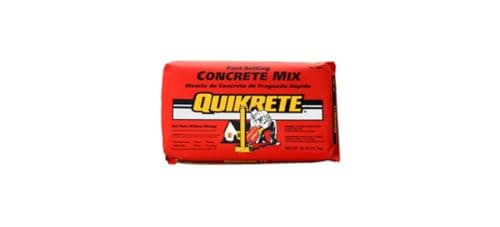
QUIKRETE Fast-Setting Concrete Mix (No. 1004), 50 lb
Warranty: not published9.0/10The published set time is a fraction of standard mix, which is the one legitimate way to shorten the gap between pour and load, where the hoop's manual allows it.
Check price · Amazon#ad · Price as of November 3, 2026 · Disclosure for the link to QUIKRETE Fast-Setting Concrete Mix (No. 1004), 50 lb
Best post level
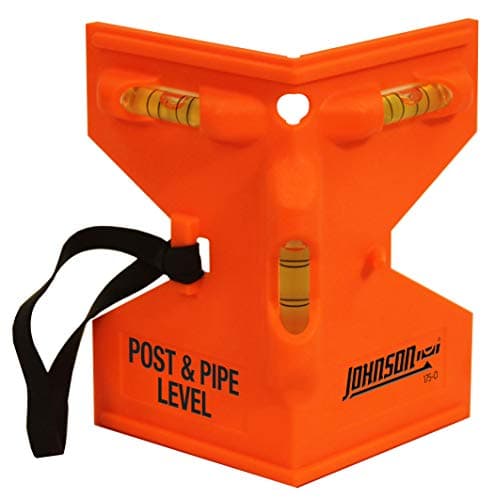
Johnson Level 175-O Post & Pipe Level
1-yr warranty9.5/10Three vials, a rubber strap and both hands free for the levelling nuts. The ten-dollar tool that decides whether the board plays square forever.
$7.98Amazon#ad · Price as of November 3, 2026 · Disclosure for the link to Johnson Level 175-O Post & Pipe Level
How we picked
What earns a pick on this page
Every pick here is built from figures you can check for yourself: the maker's published backboard, pole, overhang and adjustment specs; the hole size, bag count and cure time printed in its install manual; the warranty term in the maker's own wording, exclusions included, with the date we read it; and the failure patterns owners report (base cracking, backboard fogging, two-piece pole lean), which shape the “skip this if” line. Every figure links to where it came from.
Those figures go through one fixed rubric, so an 8.1 here means the same thing as an 8.1 anywhere else on the site and the top pick is the one that earns it for the driveway it is named for. Commissions never set a score or decide a pick. The rubrics and their weights are published.
Questions
Frequently asked
How long does it take to install an in-ground basketball hoop?
About five to seven hours of actual work spread over five calendar days: two to three hours to dig and pour on day one, a minimum 72-hour concrete cure, then three to four hours of assembly — Lifetime's own published figure, with at least three adults. Goalrilla recommends mounting on day five, and the Silverback SB60 manual lays out the same day-1-anchor, days-2-to-4-cure, day-5-assembly sequence.
Can I use the hoop before the concrete has fully cured?
No. Every manual on this site specifies a minimum of 72 hours before the pole is loaded, and Goalrilla recommends waiting until day five. Standing a pole on green concrete is how an anchor bolt pulls out of a footing, and it is not recoverable without breaking out the whole thing.
How long does a portable basketball hoop take to put together?
Spalding publishes a 30-minute assembly claim on its Momentous H-frame line, which is the fastest figure here. Most portables are a two-to-three-hour job, and filling the base is a large part of that — a 35-gallon base is about 292 lb of water, and sand takes far longer to get in than water does.
How many people do I need?
For an in-ground system, three to four, and that is the makers' own instruction rather than ours. Lifetime's bolt-down listings say at least three adults; the Silverback SB60 manual says four adults on assembly day; Goalrilla says placing the post needs at least four capable adults. A portable is a one- or two-person job.
Does a fast-setting concrete mix let me skip the wait?
It can shorten it where the hoop's own manual permits a fast-setting product, because the published set time is a fraction of standard mix. It does not remove the wait. Follow the hoop manual first and the mix data sheet second, and if the two disagree, wait the longer of the two.
Keep reading
Related on Rim & Rebound
Receipts
Sources
- Amazon listing — Lifetime 90568 In-Ground 54-Inch Tempered Glass hoop: 3/8 in glass, crank adjust, bolt-down pole and concrete requirement (live Amazon listing, read 2026-10-04)
- Amazon listing — Lifetime 90569 Bolt-Down In-Ground 60-Inch Glass hoop: concrete requirement, crank adjust and Slam-It Ultra rim (live Amazon listing, read 2026-10-04)
- Lifetime — "Basketball Hoop Assembly: In-Ground and Bolt-Down" (read 2026-09-21)
- Goalrilla — Basketball Hoop Installation guide (read 2026-09-21)
- Silverback SB60 (B5402W) owner's manual — anchor installation, assembly and Limited 7 Year Warranty (PDF hosted by Lowe's; read 2026-09-21)
- Goalrilla Anchor Kit B1002 — Anchor System Installation Instructions (PDF hosted by BasketballGoalStore; read 2026-09-21)
- Goalrilla — 9" Basketball Hoop Anchor Kit (B1002) product page (read 2026-09-21)
- Spalding — Momentous Ez Assembly H Frame Portable Basketball Hoop product page (read 2026-09-21)
- Pro Dunk Hoops — THOR Gold (Pro Dunk Gold) product page (read 2026-09-21)
- Goalsetter — MVP Adjustable Basketball Hoop product page (read 2026-09-21)
- QUIKRETE — Concrete Mix No. 1101 data sheet (yields per bag, water, strength; read 2026-09-21)
- QUIKRETE — Fast-Setting Concrete Mix (No. 1004) data sheet: yields, water, ASTM C387 and the two-bag post calculation (read 2026-09-29)
- Johnson Level & Tool — 175-O Post & Pipe Level product page (read 2026-09-21)
- 811 Before You Dig — the free national call-before-you-dig service (read 2026-09-21)
- Thumbtack — basketball hoop installation cost (national average, updated Apr 14, 2026; read 2026-09-21)
Every figure above is a published one you can click and check. Specs come from the maker's own product pages (linked on every product), install figures from the maker's manual or installation page with the date we read it, and warranty terms from the maker's warranty page or manual. Buy buttons go straight to the current Amazon listing, so the price you see is today's. Where a maker leaves a figure off the page, the card says “not published” rather than guessing. Read how we pick.